

Professional In-Office Teeth Whitening in Tokyo: What International Patients Should Know
Last Updated on 2 weeks ago by prebeau
If you are considering professional teeth whitening in Tokyo, one of the first questions is often simple:
What is the difference between whitening at a dental clinic and products or services I can use on my own?
Professional in-office whitening is performed in a dental setting after the teeth and gums have been assessed. It uses a peroxide-based whitening agent to lighten the color of natural teeth.
At PreBeau Oral Care in Akasaka, Tokyo, we provide professional in-office whitening for international patients who would like to discuss their treatment directly with the dentist in English.
Our approach is not to make every patient’s teeth the same shade. We first consider the condition of the teeth, existing restorations, sensitivity, white spots, and the patient’s goals before deciding whether whitening is appropriate.
Written and medically reviewed by Kuniyasu Mori, DDS, Director of PreBeau Oral Care.
What Is Professional In-Office Teeth Whitening?
In-office whitening is performed at a dental clinic using a professional whitening agent.
The active ingredient in many professional systems is hydrogen peroxide.
Hydrogen peroxide penetrates the tooth structure and oxidizes compounds associated with discoloration, which can make natural teeth appear lighter.
Unlike professional cleaning, which mainly removes plaque, deposits, and certain surface stains, whitening is intended to change the color of the natural tooth itself.
If you are unsure which treatment you need, see:
Dental Cleaning vs. Teeth Whitening: Which Should Come First?
Why Have Your Teeth Examined Before Whitening?
Whitening should not simply begin because a patient would like brighter teeth.
Before treatment, we look for conditions that may affect safety, comfort, or the expected result.
These may include:
- untreated tooth decay
- significant tooth sensitivity
- cracks or damaged teeth
- gum inflammation
- exposed root surfaces
- crowns, veneers, or composite restorations
- white spot lesions
- differences in color between individual teeth
Existing crowns, veneers, and most composite restorations do not whiten in the same way as natural enamel.
This means that whitening may sometimes create a color difference between natural teeth and existing restorations.
For that reason, examination and treatment planning are important before whitening begins.
Which In-Office Whitening System Does PreBeau Oral Care Use?
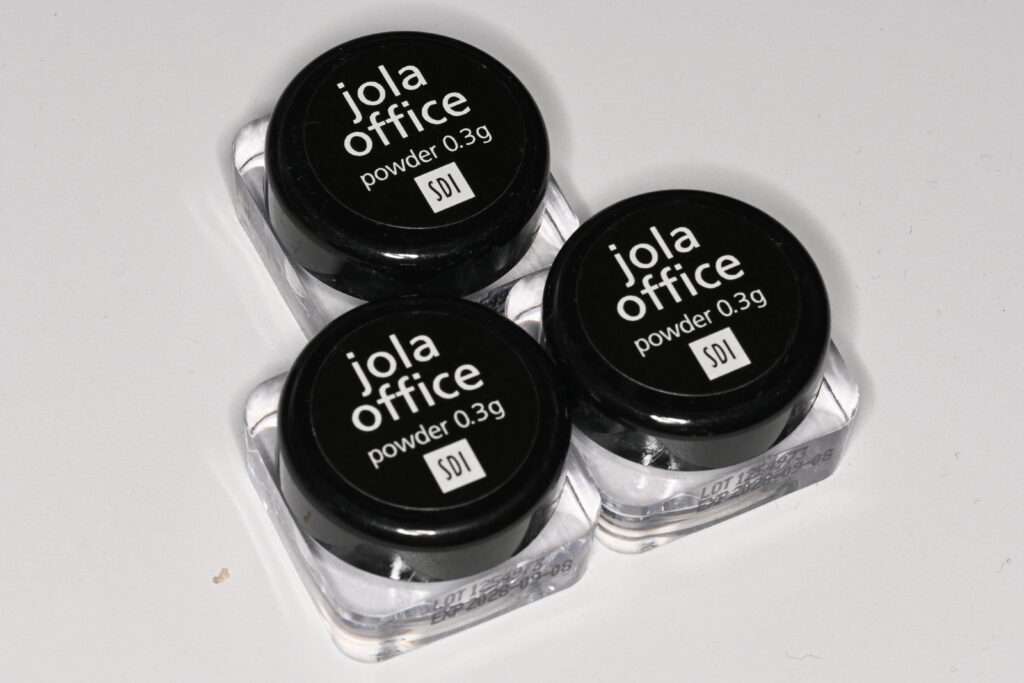
PreBeau Oral Care uses Jola Office, a professional in-office whitening system based on a 35% hydrogen peroxide formulation.
The system is related to SDI’s professional in-office whitening technology. SDI’s published product information for Pola Office describes a 35% hydrogen peroxide formulation and the inclusion of potassium nitrate, a desensitizing ingredient commonly used in professional whitening products.
We selected this type of system because it allows us to provide professional whitening in a controlled clinical setting while adjusting treatment according to each patient’s response.
Our decision is not based simply on choosing the strongest available whitening agent.
We consider:
- whitening effectiveness
- treatment time
- sensitivity
- condition of the enamel and gums
- the patient’s previous whitening experience
- the desired degree of color change
No whitening system is ideal for every patient.
Does 35% Hydrogen Peroxide Damage Enamel?
This is an understandable concern.
High-concentration peroxide products should be used appropriately and under professional supervision.
Research examining professional peroxide whitening systems shows that the effect on enamel depends on multiple factors, including concentration, pH, contact time, formulation, and treatment protocol.
This is why it is too simplistic to say either:
“35% hydrogen peroxide damages enamel”
or
“35% hydrogen peroxide has no effect on enamel.”
Professional whitening should instead be performed according to the manufacturer’s instructions and after assessing the individual patient’s oral condition.
At PreBeau Oral Care, we do not extend treatment simply to pursue the lightest possible shade.
The patient’s teeth and comfort remain part of the decision about how far to proceed.
What About Tooth Sensitivity?
Temporary tooth sensitivity is one of the most commonly reported side effects of tooth whitening.
Some people experience little or no sensitivity, while others may notice short, sharp sensations during or after treatment.
Sensitivity can be influenced by:
- whitening agent concentration
- contact time
- existing sensitivity
- exposed dentin
- cracks or enamel wear
- individual biological response
The whitening system used at our clinic contains potassium nitrate, an ingredient used in dentistry to help manage sensitivity.
However, its presence does not mean that sensitivity can never occur.
We therefore ask patients about their comfort during treatment and modify or stop treatment when clinically appropriate.
What Happens During an In-Office Whitening Appointment?
The exact procedure depends on your dental condition and the whitening protocol being used.
A typical appointment may include:
1. Examination
We first evaluate the teeth, gums, existing restorations, areas of sensitivity, and other findings that could affect whitening.
2. Initial Shade Assessment
The starting tooth color is recorded so that changes can be evaluated more objectively.
3. Protection of the Gums and Soft Tissues
A protective barrier is placed to reduce contact between the whitening material and the gingiva.
4. Application of the Whitening Gel
The professional whitening agent is applied to the teeth being treated.
5. Whitening Cycles
Depending on the clinical protocol and your response, the application may be performed in more than one cycle.
At PreBeau Oral Care, we pay attention to your comfort rather than automatically continuing treatment regardless of sensitivity.
6. Final Assessment
After treatment, the whitening material is removed and the teeth are reassessed.
We also explain appropriate aftercare.
How Long Does In-Office Whitening Take?
Appointment time varies according to the system used, preparation, examination, and the number of whitening cycles performed.
At PreBeau Oral Care, the entire appointment is generally planned to allow time for:
- examination
- preparation and gingival protection
- whitening applications
- sensitivity checks
- post-treatment evaluation
We do not recommend choosing a whitening clinic solely on the basis of which treatment advertises the shortest appointment time.
Clinical assessment and appropriate use of the whitening material matter more than speed alone.
How White Will My Teeth Become?
There is no reliable way to promise an exact final shade before treatment.
Whitening response varies between individuals.
Factors include:
- starting tooth color
- type and cause of discoloration
- age
- enamel and dentin characteristics
- previous whitening
- smoking
- dietary habits
- existing restorations
Some teeth respond more readily than others.
The goal should therefore be an appropriate improvement in tooth color, rather than an artificial guarantee of a particular shade.
Will Crowns, Veneers, or Fillings Whiten?
Generally, no.
Professional whitening primarily changes the color of natural tooth structure.
Crowns, veneers, composite resin fillings, and other restorative materials do not respond in the same way.
This is especially important if restorations are present on the front teeth.
After whitening, a previously well-matched restoration may appear darker than the surrounding natural teeth.
If this is relevant to you, we discuss it before treatment.
What If My Teeth Have White Spots?
White spots require special consideration before whitening.
A white spot is an area of enamel that appears more opaque than the surrounding tooth.
There are several possible causes, and not every white spot requires treatment.
During whitening, the surrounding tooth color changes. As a result, an existing white spot may temporarily appear more noticeable.
This does not necessarily mean that whitening has created a new white spot.
For suitable cases, Icon resin infiltration may be considered after evaluating the enamel and the cause of the lesion.
Dr. Kuniyasu Mori treats white spot lesions with Icon resin infiltration and is involved professionally in education relating to this treatment.
For more detailed information, see:
Whitening and White Spots: Why White Patches May Become More Noticeable
and
White Spot Treatment with Icon Resin Infiltration
Importantly, not every white spot is suitable for Icon, and a uniform cosmetic result cannot be guaranteed.
In-Office Whitening or Home Whitening: Which Is Better?
Neither method is automatically better.
They serve different needs.
In-Office Whitening
May be suitable for patients who:
- prefer treatment performed at the dental clinic
- want to begin changing tooth color relatively quickly
- do not want to wear whitening trays every day
Home Whitening
May be suitable for patients who:
- prefer gradual whitening
- are comfortable using custom trays at home
- want more control over when treatment is performed
At PreBeau Oral Care, both approaches are available.
For a detailed comparison, see:
In-Office vs. Home Whitening: Which Is Better?
What Is Dual Whitening?
Dual whitening combines in-office whitening and dentist-supervised home whitening.
The purpose is to combine the advantages of both approaches.
In-office treatment provides a professional whitening session at the clinic, while home whitening continues the process over a longer period.
This may be appropriate for some patients who want a more comprehensive whitening plan.
However, more treatment does not automatically mean better treatment.
Sensitivity, dental condition, treatment goals, and patient preference should all be considered.
Learn more here:
What Is Dual Whitening? Benefits of Combining Office and Home Whitening
How Long Does Whitening Last?
Whitening results are not permanent.
Over time, tooth color may gradually change again.
The rate of color change varies depending on factors such as:
- coffee and tea consumption
- red wine
- smoking
- dietary habits
- oral hygiene
- natural aging
- individual tooth characteristics
Some patients choose periodic maintenance or home whitening after their initial treatment.
Read more:
How Long Does Teeth Whitening Last? Causes of Color Relapse and Maintenance
What Should I Eat After Whitening?
Patients are often told to avoid all colored foods after whitening.
In practice, aftercare recommendations depend on the whitening system and individual situation.
We provide specific instructions after treatment.
If you would like a detailed explanation, see:
What Can I Eat After Teeth Whitening?
Professional Teeth Whitening for International Patients in Tokyo
For international patients, understanding the treatment is just as important as the treatment itself.
At PreBeau Oral Care, you can discuss your whitening treatment directly with Dr. Kuniyasu Mori in English.
This includes:
- whether whitening is appropriate
- expected benefits and limitations
- sensitivity
- existing restorations
- white spots
- alternative treatment options
- expected costs
Dr. Mori completed his undergraduate education at the University of Washington, graduated from Osaka University School of Dentistry, and received postgraduate training at the University of Michigan and UCLA.
For broader information about dental care in English, fees, and services for international patients, visit our:
English-Speaking Dentist in Tokyo
page.
Professional Teeth Whitening Fees at PreBeau Oral Care
Current published fees include:
Office Whitening: ¥22,000 including tax
Current limited-offer fee; standard pricing may differ.
Home Whitening Set: ¥33,000 including tax
Premium Whitening — Office + Home: ¥55,000 including tax
Treatment recommendations depend on the condition of your teeth and your goals.
Please confirm current pricing when booking, as fees and promotional pricing may change.
For the complete whitening menu, visit:
Professional Teeth Whitening at PreBeau Oral Care
Frequently Asked Questions
Is Professional Teeth Whitening Safe?
Professional whitening is widely used in dentistry, but it is still a clinical procedure that can cause temporary sensitivity or soft-tissue irritation.
The teeth and gums should be assessed before treatment, and whitening materials should be used according to the appropriate clinical protocol.
Does In-Office Whitening Hurt?
Some patients experience temporary sensitivity during or after treatment, while others experience little or none.
Sensitivity varies between individuals and cannot be completely predicted.
How Many Whitening Sessions Will I Need?
There is no single number that applies to everyone.
The number of sessions depends on your starting tooth color, desired result, dental condition, and individual response to treatment.
Can Fillings and Crowns Be Whitened?
Existing crowns, veneers, and composite restorations do not whiten like natural teeth.
This should be considered before whitening, particularly when restorations are visible in the smile.
Can I Have Whitening If I Have White Spots?
Possibly, but the white spots should be assessed first.
Whitening can alter the contrast between white spots and surrounding enamel. In selected cases, additional treatment such as Icon resin infiltration may later be considered.
What Is the Difference Between Dental Whitening and Self-Whitening?
Professional dental whitening uses dentist-managed peroxide-based whitening materials to change the color of natural teeth.
Services marketed as self-whitening outside dental clinics may use different materials and act primarily on surface discoloration.
Read:
Dental Whitening vs. Self-Whitening: What’s the Difference?
Why We Take a Conservative Approach to Whitening
PreBeau Oral Care is built around a simple principle:
Preserve healthy natural tooth structure whenever clinically appropriate.
Whitening fits this philosophy because improving natural tooth color does not require preparing teeth for crowns or veneers.
However, this does not mean that every patient should have whitening.
Sometimes professional cleaning is sufficient.
Sometimes an existing restoration is the main reason for a color mismatch.
Sometimes a white spot requires separate assessment.
And sometimes whitening should be postponed until another dental condition is treated.
The first question should therefore not be:
“How white can we make the teeth?”
It should be:
“Why do the teeth look this way, and what is the most appropriate way to address the patient’s concern?”
Professional Teeth Whitening in Akasaka, Tokyo
PreBeau Oral Care is located in Akasaka, Minato-ku, central Tokyo.
PreBeau Oral Care
Urbane Akasaka 5F
3-15-5 Akasaka
Minato-ku, Tokyo 107-0052
Japan
Approximately:
- 2 minutes from Akasaka Station
- 4 minutes from Akasaka-mitsuke Station
- 6 minutes from Tameike-sanno Station
- 8 minutes from Nagatacho Station
Office Hours
Monday–Friday
9:30 AM–1:30 PM
2:30 PM–6:30 PM
Closed Saturdays, Sundays, and national holidays.
PreBeau Oral Care is a fully private, self-pay dental clinic.
Japanese National Health Insurance is not accepted.
References
SDI — Pola Office Professional In-Office Whitening System
SDI Pola Office Product Information
The manufacturer’s information describes Pola Office as a 35% hydrogen peroxide professional system and lists potassium nitrate as a desensitizing ingredient.
Scientific review of professional peroxide whitening and enamel characteristics
Effect of pH of In-Office Bleaching Gels and Timing of Fluoride Gel Application on Microhardness and Surface Morphology of Enamel
These references are provided for general scientific context. Clinical outcomes and sensitivity vary between patients.
About the Author
Kuniyasu Mori, DDS
Director, PreBeau Oral Care
- University of Washington
- Osaka University School of Dentistry
- Postgraduate training at the University of Michigan
- Postgraduate implant training at UCLA
Read Dr. Kuniyasu Mori’s professional profile.
This article provides general information about professional tooth whitening and does not replace an individual dental examination, diagnosis, or treatment recommendation. Whitening outcomes, sensitivity, treatment duration, and suitability vary between individuals.